Wednesday, August 13, 2014

A review of "We Were Liars" by E. Lockhart

We Were Liars has been talked about all summer as the new trendy YA novel, and from first glance, it's got all the right credentials: a prominently placed quote of praise from "Mr. YA" himself, John Green on the cover, an intentionally vague plot summary on the dust jacket that speaks of a "shocking surprise ending", and photographic cover art. After I read it, however, it was revealed to be a far more old-fashioned affair. It's a psychological thriller from YA novelist E. Lockhart, that tells the story of Cadence Sinclair, a wealthy 17 year old girl who lives an idyllic life of golden sunsets and childhood adventure on an island off the coast of Massachusetts during the summer, until a mysterious accident changes everything.  

There is a lot of good stuff in this book. Its characters are all likable and occasionally funny, and even though they lean slightly on comforting archetypes like "affable goofball", there are enough little details to keep them feeling real, and less like cliches. The writing is spare and elegaic enough to both convey the intricacies of teen angst, and the beauty of the island. Lockhart also knows how to write a good suspense thriller, revealing small clues along the way, until hitting the reader with the big ending reveal. She creates a real sense of mystery and dread that sustains until the rather disappointing surprise ending. 

It's not perfect however. Its old-mansion-old-money setting harks back to 50's teen romances like A Summer Place, and the spookiness of the plot seems to recall even older gothic novels like Wuthering Heights (which is once directly name-checked by a character), and The Castle of Otranto, so it often seems like it should be set in another time period. As a result, it was often distracting to see references to iPads and other modern items among the lush, romantic descriptions of swimming in the ocean and making homemade wine, and as a result, often made the tone of the story seem uneven. It often seems to be trying too hard to hector the audience about race and class in America, and at several points in the story, characters stop what they're doing to make small speeches about those aforementioned issues, that often feel like Lockhart hitting me over the head with a large hammer labeled "SOCIAL COMMENTARY". 

Of course, I can't forget the infamous surprise ending. I don't know how other people took it, but I thought it was rather cheap. It's essentially (SPOILER ALERT: DO NOT READ ON IF YOU CARE ABOUT SUCH THINGS) the hoary old chestnut "It was all a dream" that I thought died out with pulp novels. One could argue that it was done partly in homage to the creaky 1930's and 40's melodramas the book is essentially a modern riff on, but that still doesn't make up for how much of an unsatisfying cop-out it was.This prominent flaw will probably prevent it from being the next Fault in Our Stars or Thirteen Reasons Why, but aside from that's it's an okay pulp suspense novel.

Grade:
B

Friday, April 4, 2014

The Catcher in the Rye - J.D. Salinger


The Catcher in the Rye - J.D. Salinger

The Catcher in the Rye is about a boy named Holden Caulfield who gets kicked out of Pencey Prep school. He does not like his school and therefore does not apply himself there. He also accuses almost all the students and teachers at Pencey Prep to be phonies. After he leaves the school, Holden Caulfield has to go home, except he doesn't want to go right away. Because of that, Holden Caulfield decides to explore the world in New York City by himself. This book is about his many adventures and many thoughts during this few day period.

I had to read The Catcher in the Rye for my American Lit class. At first I thought this was going to be another typical boring book that I had to read for school. However, I realized that The Catcher in the Rye was a very real book. Holden Caulfield thinks many interesting thoughts, and it was a pleasure to hear his opinions about things, such as peer pressure, parenting, phoniess, sex, and careers. Although it was not my favorite book that I had read, I could find no faults with it. It thought it was well-written, and J.D. Salinger did a good job portraying the realness and humanness in the The Catcher in the Rye. It was a very good book!

Out of my Mind - Sharon Draper


Out of my Mind - Sharon Draper

The book Out of my Mind by Sharon Draper is a book about a young girl named Melody who has cerebral palsy, which affects her nervous system and makes her unable to move a lot or control her movement. Because of this, she could also not talk except in shrieks, cries, and other noises. This is especially difficult for her when she goes to school, because she is unable to communicate with anyone clearly.

On the bright side, Melody has one advantage: she is extremely smart. She has a photographic memory that can remember the most minute details from years back. She watched a lot of educational TV and has learned a lot to begin with. So when she finds out there is a Quiz Bowl team, she auditions for it, except nobody thinks that she will do well at all. However, Melody is devoted enough to prove everybody wrong and that she is a person who is worth a lot!

In my opinion, this was a very good book. I could easily sympathize with Melody and the ending did surprise me. I even got misty-eyed at one part of the book. The only fault I had with this book was that the dialogue was a bit unrealistic at times; some of the insults thrown at Melody were completely unlike what people would say today. Despite that negative point, however, I thought Out of my Mind by Sharon Draper was a great book that opened my eyes to help understand people with mental disabilities more and to understand that they are actually just as equal as everybody else.

Wednesday, March 5, 2014

Evey Day - David Levithan


Did you ever wonder how life would be if you were somebody else? Well in Every Day by David Levithan, a human soul named A wakes up in a different person's body every single day. A has done this since the day it was born. However, one day, A falls in love with a girl named Rhiannon. A feels love it has never felt before, and it wants to spend the rest of its life with her. However, asides from the fact that she has a boyfriend, A cannot stay in one person's body. Can Rhiannon still love A even though he changes every day?

In my opinion, the best aspect of this book wasn't the romance. In Every Day, A lives inside a different person's body every single day. It goes only into bodies of people its age (16), but A lives in many people. Because of this, the reader gets to see and better understand the positions of other people's lives. They get a better perspective on the realities and truths of men, women, depression, race, ethnicity, homosexuality, and mental disabilities. One can learn to appreciate and accept these people more after reading Every Day by David Levithan.

A great, original plot, combined with a deeper message creates Every Day by David Levithan, an amazing book that is definitely worth reading.

Saturday, October 19, 2013

'Round Midnight Part Two: "The Figure in the Shadows" by John Bellairs


In honor of Halloween, all this month I'm going to be reviewing books that have scared over the years, in a new series I call "'Round Midnight".

John Bellairs, I guess you could say, was the thinking man's R.L. Stine. He, like Stine, made a career churning out a panoply of childrens' horror books, but while Stine's work (which isn't without its merit, mind you) is full of grotesque images, and often aspires to be kiddie Stephen King, ends up being blackly comic self-parody often reminiscent of the Evil Dead series. Meanwhile, John Bellairs' books took their inspiration from classic American ghosts and ghouls writers like Ambrose Bierce and Edgar Allen Poe, and often relied more on atmosphere, and suggestion to create fear, than whatever screwed up thing came into the author's head. The Figure in the Shadows, was one of my first forays into the horror genre at large, and as such, this article will be more of a nostalgic retrospective/recommendation than a  review.

 Even though it's not as well known as his (quite delightful) gothic mystery, The House with a Clock in its Walls, The Figure in the Shadows was one of the first books to truly terrify me. Sure, certain scenes in Harry Potter books (the first appearance of the Dementors, for example) and the dread-filled Series of Unfortunate Events spooked me, but it wasn't until this book, that I ever trembled with fear while reading. It tells the story of Lewis Barnavelt, a kid who has the unfortunate habit of getting into trouble with the invisible world, finding a coin with magical powers, that unfortunately is also connected to a malevolent spirit. He's appeared in other books of Bellairs', including The House with a Clock in its Walls, and is different other kids' fantasy protagonists, because of how roundly average he is: he has an above average intellect, but isn't a genius, he's kind of overweight, and has no special powers to speak of, making him the quintessential everyman. This helps the reader to sympathize with how truly out of his depth he is, when he's thrown into situations beyond his comprehension.

Even though he does go on to many other adventures after this one, Bellairs does a good job making you disregard this, and fear for Lewis' life during particularly tense moments. The supporting characters are also pretty well developed, and are far more competent than Lewis at dealing with his ghost problems. But where Bellairs really excels is taking the sublime spookiness of the best ghost stories, and combining them with a propulsive overarching plot. He knows how to create tension and atmosphere, emphasizing the almost existential loneliness of Lewis' hometown of New Zebedee, Michigan to great effect, especially during the scene when the ghost approaches Lewis' home.

The famed illustrator Edward Gorey slummed it drawing for Bellairs' books, and added to the creepy mood with his subdued, starkly beautiful depictions of the events of the aforementioned scene. This specific passage, was the one that made my heart pound with dread and horror, and nearly put me off Bellairs' work forever, until I realized how much fun it was being that terrified. And that thrill of controlled fear is what's been bringing me back to horror fiction ever since.

Saturday, October 5, 2013

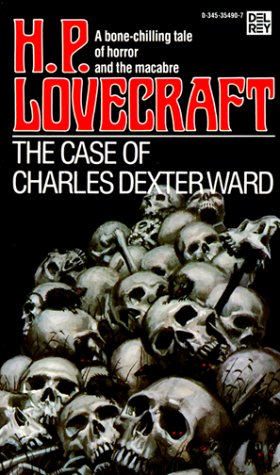
'Round Midnight Part One: "The Case of Charles Dexter Ward" by H.P. Lovecraft


In honor of Halloween, all this month I'm going to be reviewing books that have scared over the years, in a new series I call "'Round Midnight". 

For a notorious shut-in and misanthrope, H.P. Lovecraft sure knew how to scare a person. His "Cthulhu Mythos" stories are known for their quaint New England settings, their unique cosmology, and overwhelming sense of cosmic dread. He was one of the first horror authors to stray away from your typical witches-ghosts-undead triumvirate, and was met with middling success during his life, but after his death was revered as one of the greatest writers in the genre, and highly influential on authors from Stephen King to Neil Gaiman. He was also a racist in the "grouchy old man" mode, but we'll get to that later.

His 1927 novella, The Case of Charles Dexter Ward is strange among the works in his oeuvre, in that it grafts his "mind-breaking abominations from beyond the void are slowly taking over the universe" ideas onto a traditional English-style detective thriller. This actually works surprisingly well. It concerns a young man named (you guessed it) Charles Dexter Ward. He's a pretty normal WASP-y New Englander who develops a strange obsession with his long dead ancestor Joseph Curwen, who was known for his eccentric habits. Not to ruin much, but things go pear shaped, and his doctor, Marinus Willett, is sent in to investigate.

The beginning of the book is a little slow. Lovecraft enjoys building atmosphere gradually over time, but all that eventually culminates to some of the scariest horror writing ever. I was reading this on the train, one of the least immersive places to read, and I was afraid. This is made even more impressive when you see that Lovecraft doesn't rely on cheap shocks, or overly gruesome/sick description to make you jump. The mystery elements ground it, so it doesn't float too far off into Lovecraft's twisted, whimsical head, like some of his other novellas (e.g. The Dream-Quest of Unknown Kadath), and provide a welcome relief and comfort from the stark horror taking place elsewhere. There even is a little comedy at one point, although it's easy to miss.

I have two main issues with it, though. It takes a long time for Charles Dexter Ward to get going, and it often spends pages digressing into the villainous Curwen's backstory, which drags a bit. The aforementioned racism is also at play here, but only in the occasional descriptive passage. Lovecraft didn't get out much (and kind of hated all people), so he ended up with a skewed perception of humankind, that most often manifested in prejudice. This doesn't forgive his racist biases by a long stretch, but doesn't diminish the mostly great writing here, and Lovecraft's impact on the genre of horror. In total, this is a flawed, but singularly frightening work from one of America's premier masters of spooky.

Grade:
B+

Saturday, August 24, 2013

One More Triple Post: Nine Days, Light, and a preview of The Dream Thieves

I've finally got around to doing this: my last blog entry. (cry) So I'll do it on the three books I think I enjoyed the most this summer.

Nine Days


Nine Days by Fred Hiatt is about Ti-Anna and Evan, two high school sophomores who bond over their interest in social justice in China. After Ti-Anna's father, a Chinese human rights advocate, disappears in Hong Kong, Ti-Anna and Evan must go to Hong Kong in secret and only have nine days to find and rescue him.
I have been learning and taking interest in some human rights stuff, and this book really brought it to life, especially towards the end where Ti-Anna and Evan uncover a human trafficking ring. The story was fast paced and hooking, and Ti-Anna and Evan were two kids I could definitely cheer for and say "You go, guys!" I felt like I was in Hong Kong with them as they tried to find Ti-Anna's father. This is the perfect book to help you get interested in human rights and the best part is that it's based off the story of someone who was in Ti-Anna's shoes.

Light


Light by Michael Grant is the final book in the Gone series. For those who haven't read it, the series about a town where everyone over fourteen has disappeared and those who are left are cut off from the rest of the world. They must fight to survive, find food, discover their new abilities, and in this final book, prepare for the final battle with the force that put them in this situation in the first place and exit the FAYZ (what they call the area they are living in).
This book was the perfect ending to a perfect series, and it left me breathless and thinking about it for a long time after. It was the perfect balance of action, romance, and suspense and I felt like I knew each and every character almost as well as real people. Fans of the series, be forewarned: a lot of main characters die in this one, so your favorite might not be there to see the end of the FAYZ.

The Dream Thieves
 
The Dream Thieves by Maggie Stiefvater doesn't come out until September 17, but Ms. Miller lent me the arc, and I loved it (thank you again, Ms. Miller!). I don't want to spoil anything for anyone, so I'll stick to a brief summary and a few thoughts.
Since Blue and her friends have woken up the Cabesbury ley lines, things have definitely gotten strange. Adam is still acting strange. Ronan is able to take things out of his dreams. Blue is starting to wonder if she has a crush on Gansey. And who is that strange man in gray and what does he want?
Maggie Stiefvater, as usual, wrote a beautiful work of awesomeness. The characters and setting are so lifelike, and the plot is so complex, you're not going to want to stop reading this. If you haven't read The Raven Boys yet, I highly recommend that you start, and then read this one. You are in for a treat.

Friday, July 19, 2013

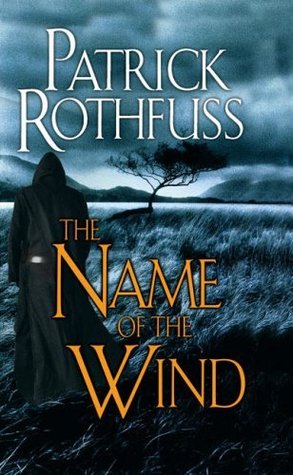
A review of Patrick Rothfuss' "The Name of the Wind"


This is one of those fantasy books that everyone was talking about a couple years ago. They foamed at the mouth about the "serious", "gritty" nature of the book, how it was all about how "heroism went wrong" and made it seem like The Witcher-level fantasy grimdark. The A.V. Club called it "one of the best stories told in any medium in the past 10 years." Even though that site has had its issues in the past (pretension, smugness, near-religious worship of Donnie Darko), I was prepared to trust them on this one. And, you see, it kind of lived up to them. Kind of.

It's about a kid named Kvothe who's parents get killed by a mysterious monster. He then makes it his life's work to pursue the monster, by becoming good at everything. He ends up living on the street and having wacky misadventures at a school for wizards. Wait a second, where have I seen this before? I'd say I'm feeling ambivalent about this book. It told  a surprisingly good, if formulaic story. It's a sort of twist on the old "kid gets orphaned but finds out he's super special" tale, and takes the Harry Potter route of "goof around a bit before advancing the story" to an extreme, reaching almost Gaiman-like levels of "wait a second, there was an overarching plot here".

This isn't actually bad, and lets you luxuriate in Kvothe's world for a bit before a new plot event, but the physical descriptions of places aren't as lush as J.K. Rowling's making it harder to get immersed. The wizards' school is interesting enough, but reminds me too much of another certain child sorcerer's old haunts, complete with simulacrums of Professor Snape and Draco Malfoy tormenting Kvothe. But my real issue is with the character of Kvothe himself: while being urbane and witty, and a sterling storyteller, he also isn't bad at anything. Really. Most everyone in the book including Kvothe himself spends their time talking about how awesome he is.

 He seems to use his effortless charm and ebullient wit to get out of any sticky situation, no matter how dire. This wouldn't be as annoying, if he weren't so accursedly entitled. He acts like he "deserves" everything he's getting because he's so much better at everything than everyone else. The author supports him in thinking thusly. Just to compare, in George R.R. Martin's A Game of Thrones, when Jon Snow spouts the same sort of whiny "I deserve this" bull, both the author, and the characters around him actively razz him for it, while in The Name of the Wind, everyone else around him seems to basically say "You're right, Kvothe, you are really that awesome".

Don't even get me started on the love story: it's basically a combo of everything that ever annoyed me about John Green protagonists (angst, neurosis, whiny-ness, not thinking of girls as actual people instead of fantastical objects of desire), and the aforementioned shameless self promotion. AUGH. No, but seriously, if you can look past all that, there's a solid book underneath. The world is pretty interesting, if a bit confusing, and the other characters, even Kvothe at times, endear themselves to the reader. The chemistry between Kvothe and his friends is fun, because it's more like an 80's coming of age film than Harry Potter, and the plot can be very entertaining at points, leading in unexpected new directions every few chapters.

But as for it being "dark", it was nowhere near, and except for the occasional curse word or sexual reference, it could be a juvenile fantasy novel. So honestly, for the most part, I enjoyed The Name of the Wind. Is it "the best story told in any medium in the past 10 years"? No way.

Grade: B

Sunday, July 7, 2013

Kindness for Weakness by Shawn Goodman

Kindness for Weakness - Shawn Goodman
My first post! =)

Summary: A kid named James lives in a town. He has no friends, his dad hates him, and his mom is defenseless and does nothing to care for him. His brother is a tough guy who does drugs and has friends. Because of that, in order to try to be content in life and in order to be popular, James begins dealing drugs (I believe crystal meth) for his brother. The police catch him and send him to Juvy. There, he meets a kid named Freddie, whom he befriends. At Morton (the Juvy place), James is made fun of because he is not like the rest of the kids there, and Freddie is made fun of because he is a homosexual. The head guys at Juvy also make fun of them. There, Freddie and James befriend each other, and they learn about life and how to be themselves and stick up for who they are and what they believe.

My Opinion: This is a really good book. It is well written, the dialogue is accurate, and it shows that you should always be yourself, though it may be hard, because if you're not yourself, you will not be satisfied. It was also a good eye opener to us about the outcasts of society who are different than us, and it lets us know them better and also accept/respect them for who they are. Overall, this book was great, and it was worth reading. I'm not a fan of these kind of books, but it was far different from any book of this genre I have read. 

Monday, June 24, 2013

The Summer Prince by Alaya Dawn Johnson


The Summer Prince by Alaya Dawn Johnson is about June Costa, the "best artist in Palmares Tres" in her own words. Palamares Tres, a city built inside of a pyramid in futuristic Brazil, is inhabited by a matriarchal society with a tradition of electing a "Summer King" who is then sacrificed in the wintertime and chooses the queen as he dies. Everybody, especially the wakas (young people), loves the newest Summer King, Enki, whom June sees as a fellow artist. Together, she and Enki create art, fuel a movement to let new technology into Palamares Tres, and even though they know what happens to Enki, fall in love.

The beginning of the book was very confusing. Right away I was bombarded with familiar words used in unfamiliar ways. I at first thought Auntie Yaha was June's actual aunt - until I was surprised to learn that Auntie was a title for a woman in the government and Auntie Yaha was actually June's mom's wife. After the first chapter or so, I was able to better navigate through this new and very liberal society, and as the book went on, the journey kept getting better and better. The characters and setting were very vivid, and since I had read the ending sentences before I finished the book, I loved the twist at the ending and was glad it wasn't a sappy, melodramatic ending. Overall, while the beginning was a little strange, I liked this book, and I'm still fascinated that both of the books about matriarchal societies that I've read so far seem to portray that matriarchal societies are so much more flawed than patriarchal ones. Maybe that's just me, but that's another discussion for another time.

Monday, June 17, 2013

The Fifth Wave by Rick Yancey


The 5th Wave by Rick Yancey is about Cassie, a sixteen-year-old girl who has survived four waves of an alien invasion that has decimated most of Earth's population through illness, hiding in human hosts, and raising ocean levels. Now as the dawn of the fifth wave approaches, Cassie must rescue her little brother Sammy, although she's going to need some help along the way even though she doesn't know whom to trust.

The beginning of the book was very disturbing because Yancey portrayed how low humanity can sink so well, but after a while the feeling plateaus and one easily forgets about it. The plot and the characters were vivid and realistic and kept me hooked. According to goodreads.com it's the start of a new series, and I am definitely excited to read the next book when it comes out. One should really hope there aren't actual aliens like the ones in the book around because if they do discover us, we are in trouble.

Friday, June 7, 2013

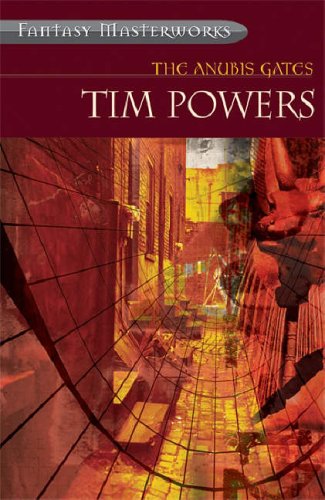
A review of Tim Powers' "The Anubis Gates"


It's rare that I describe a book as "delightful". "Delightful" implies, for me, at least, a book so good that I actually feel physical buoyancy while reading it. The Anubis Gates is one of those rare "delightful" books. It's about a man named Brendan Doyle who, at the behest of an eccentric old man, travels back in time to 1810, and gets stuck there. At first, it seems a little like Back to the Future in the Regency era, complete with goofy misunderstandings and fish out of water antics, but takes a sharp left turn when Ancient Egyptian magic gets involved.

I won't ruin too much, though, because a majority of its appeal comes from being surprised at how everything connects. The great part about it, though, is its lack of pretension. It doesn't make a big deal about its own cleverness: instead of flaunting its elaborate worldbuilding and knowledge of history, like some other historical fantasy and science fiction novels, it lets the audience fill in the gaps, and doesn't assume too much. If you don't know about the Regency, it doesn't matter, because Powers doesn't constantly hit you over the head with things specific to that time. I also appreciate the lack of put-on Britishness: normally, when an American like Powers writes a book set in old time England, you hear a lot of lines like "Give us some bees and honey guv'nor but watch out for the bloody bobbies", and often sound like they're trying too hard.

Fortunately, there's none of that here. One minor issue I have with this book, is that it's a bit slow in points, especially in the beginning, but once it gets going, it reaches delirious heights of "I can't believe he's doing this." Another is the slightly politically incorrect Egypt sections, with their cheesy, descriptions of that country's inhabitants, but they're milder than all three Indiana Jones movies combined, really. Other than that, this book was great. A perfect brainy beach read for the warmer months ahead.

Grade: A

Wednesday, June 5, 2013

The Nightmare Affair by Mindee Arnett


 The Nightmare Affair by Mindee Arnett is about Dusty Everhart, a Nightmare who feeds off people's dreams. One night, she is feeding off a boy that she knows and sees that he's dreaming about a murder that takes place at Dusty's school for the magickind. When the murder the boy, whose name is Eli, dreams about actually happens, he and Dusty must join forces to catch the killer and keep him from killing again.
While there wasn't much background given on what was going on, the plot was easy to follow and actually didn't really require a backstory about the magickind. Dusty, Eli, and their friends were very relatable, realistic characters and the plot was different and awesome. While it wrapped up well and doesn't really require a sequel, there are several elements in the story that can definitely use a sequel.

Triple Post! - Umineko When They Cry, Pretty Girl-13, Scowler


Umineko When They Cry by Ryukishi07 is about a teenaged boy named Battler who goes to a family reunion at his grandfather's home after six years of not seeing his uncles, aunts, and cousins. Battler is happy to be back among his cousins, but his aunts and uncles and parents are more interested in arguing about who gets the inheritance after the patriarch, Battler's grandfather, dies and Battler's youngest cousin, Maria, tells of a bad omen. Battler also doesn't believe in the witch that supposedly inhabits the island and gave his grandfather his fortune, but after a storm strands his family and his grandfather's servants on the island and six of the eighteen people on the island disappear and are brutally murdered, he starts to have his doubts.

I really loved this book because it was the first manga I had read in a while and I was immediately hooked by the plot. Although some of Battler's characteristics contrasts his overall personality (he's kind of sexist), he and his cousins are very intelligent, likable characters. Fans of Maximum Ride will like Maria; she reminded me of a slightly more creepy, occult-fascinated Angel.


Pretty Girl-13 by Liz Coley is about Angie Chapman, who thinks she has only been missing from a Girl Scout camping trip for only three days, but instead learns that she has been gone for three years. The book follows her as she tries to go back to living a normal life, figure out what happened to her, and why she doesn't remember.

I liked this book more than I thought I would because the characters were very complex and realistic and the plot, although a bit far-fetched at times, also was realistic yet fantastic. However, the book dealt with dissociative identity disorder and talking to Angie's different identities through hypnosis, and since I had taken psychology this year and knew that both of those things are very untrustworthy, very suggestible and very easy to manipulate and act out, I was a bit turned off. However, as the story started to reach its climax, I became more engaged and almost forgot that they weren't so reliable.


Scowler by Daniel Kraus is about Ry Burke, whose abusive father was finally checked and thrown in jail thanks to Ry's three favorite toys and imaginary friends (a British teddy bear named Mr. Furrington, Jesus, and a bloodthirsty monster named Scowler). However, just when Ry, his mother, and his younger sister are about to leave behind their home and the memories that went along with it, a meteor shower strikes their area, and with comes the return of Ry's father. Although he has rejected them for years, Ry must call on his imaginary friends for help once again.

I was kind of let down by this book because while the beginning and middle were very good, and the character of Ry and his mother were well-developed, the ending was very chaotic and confusing and I didn't understand what was going on very well. I wasn't sure if Ry had become Scowler or if the toy Scowler had been burned up on the stairs or if Ry had been seriously wounded and if he had, why he was up and about trying to kill his mother and sister. Even though the book wrapped up nicely, I was still left wondering what the heck had just happened.

Thursday, April 25, 2013

Prodigy by Marie Lu

 Prodigy picks up where its prequel Legend leaves off. Day and June, who are now refugees from the Republic (which is the western United States), must team up with the Patriots, a rebel group that wants to overthrow the government. In exchange for Day receiving medical treatment and his brother being found, June and Day must help in a plot to assassinate the new Elector. However, when June meets the Elector as part of the plan and realizes that he actually might different than his tyrannical father, she must figure out how to stop the assassination plot and still help Day.
 I really enjoyed the book a lot because the characters were very realistic and I was able to get a good grasp on the plot even though I never read the prequel. My only regret is not reading the prequel beforehand because I would have been able to understand the references made back to it more clearly. Needless to say, though, I will be reading the prequel and the third book, since the ending set the scene for a third book.

Monday, April 22, 2013

Breathe by Sarah Crossen


Breathe by Sarah Crossan is not the typical repressive government in a future society story line many teens are used to reading. Crossan takes this foundation for a dystopian novel to a new level - where the government physically interferes with each citizen's life by monitoring their oxygen intake and enclosing them in a glass "pod". The slightly cliche and predictable subplot of the "boys falls in love with the girl who was there all along" is present but the fact that all the characters literally do not know how many breaths they have left gives it a much needed refreshing twist. The characters act very similar to teenagers today. It shows that a society like the one in Breathe may not be that far removed from ours, a chilling and powerful realization.

Review by Nicolette

Saturday, April 20, 2013

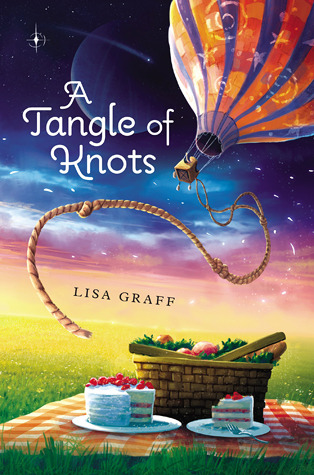
A Tangle Of Knots!


                                       Tangle of Knots

                                         By Lisa Graff


 Hey everyone! Sorry for the delay, but I have been crazy buisness with school and work! I finished this book quite a bit ago, and I have to say . . . I love it! It's a very nice fluffy tale about a group of people that are connected in some way. There talents bring them together.

I thought it was interesting how it started with a blue suitcase. Such a simple item can cause into so many events! And the character's talents are interesting:

A girl who can make a person's perfect cake, just by looking at them, a guy who always goes missing, but always appears out of no where. Or a lady that can tell if a kid belongs to a certain family. You will love this book.

I don't want to give the book away, but if you like stories that bring you to a whole diffrent world, read this book! You will think everyone has talents. No matter how big or small.

That's all for now!


Thursday, April 18, 2013

A review of "Black Helicopters" by Blythe Woolston


As anyone who knows their conspiracy theory lingo or has watched an episode of The X Files knows, "black helicopters" are vehicles that some people believe malevolent agents of the government fly around in to look menacing. While I personally don't subscribe to that theory, or most other conspiracies, really; some people are deathly afraid of these things, and hide out in the wilderness with gun and food stashes to avoid them. This book is from the perspective of one of these people, and details her life, and subsequent downfall. The writing in this was terse and fast moving, and the plot was, like  Maggot Moon, mainly based on implication and inference. The protagonist doesn't explicitly mention militias or suicide bombings, but you can definitely guess that's what she's talking about.

The use of in media res and non-linear storytelling was definitely original, and made for a more interesting reading experience. The author does a good job of making you sympathize with a person who is obviously amoral and possibly insane, and doesn't belittle or disparage conspiracy theorists no matter how easy it would be to do so. Quite thought provoking.
Grade: B

A review of "Maggot Moon" by Sally Gardner

 
The last dystopian novel I read was M.T. Anderson's Feed. This book is its polar opposite. Instead of being about a corporate run hell, it depicts a government run hell, and is as hopeful as that book was stomach-churningly depressing. It's about a kid named Standish who grows up in a version of Britain heavily implied to be run by Nazi Germany. Unlike Philip K. Dick's The Man in the High Castle which deals with  a similar scenario, it doesn't outright state that, though. Everything is implication in this novel, including Standish's homosexuality, and the identity of the so called "land of Croca-Colas" he dreams about.

The dystopia itself is made up of jumbled bits of other settings: the run-down, veddy British state of V for Vendetta, the Stalinist purges of 1984, and the Nazi run government of the aforementioned Man in the High Castle, but this isn't really the point of the story. It instead seeks to tell a simple story of the resilience of the human spirit in times of trouble, and on that level, it succeeds. The writing is darkly humorous, and also Dashiell Hammett-level laconic, and the chapters are concise, so there's no real padding. I wish the author did more with her setting, but that probably would have just served to slow it down. The unnecessarily graphic/gross illustrations might not have been needed, though, just saying. Over all, worth checking out.
Grade: B+

Friday, April 12, 2013

Love and Other Perishable Items By Laura Buzo.

What attracted me at first was the cover and the title. I judged a book by its cover, but don't we all? I have been feeling like appreciating heart-broken teenage novels. But I do not like the ones with whiny girls that hunt down the most d-bag guy they could find. But according to the back reviews I have jumped ahead of myself. They critique the novel as, 

"Smart, honest, and full of achingly real characters. And it made me laugh. What else would you want in a book?" -Melina Marchetta

It seemed like I would not be disappointed in the book based on the reviews. But the summary of the book was terrible. Amelia is a fifteen awkward teenage girl that loves to read books and mature her mind. This doesn't change the way she feels about Chris. Now what could be so bad about Chris? HE'S TWENTY-ONE YEARS OLD. He works with her at her job.

The book switches off between Amelia and Chris, but you mostly read about Amelia. And another important thing to know that I only fully noticed in the half of the book is that this is set in Australia.

Amelia immediately as soon as the book starts, falls in love with him. He affectionately calls her, "Youngster" as if she doesn't realize how much he doesn't see her as an equal. Of course, there are cute point of views between he and Chris from Amelia's view that I could relate to, being fifteen years old myself. But it doesn't excuse how ignorant she is about her relationship limit between her and Chris is. Even if she does "read" classics, that I haven't read I feel like I'm more mature than her. This interfered with the way that I read this book because I felt like I was reading about a super smart thirteen year old fall in love with her older brother.

The one thing I did like about this book is that the author actually gave Amelia a chance with Chris. She didn't look down on Amelia, making her look absolutely pathetic (even though she was at times)

Laura Buzo spins a new kind of relationship that actually makes Amelia and Chris' relationship work at times. I loved that part. But the part about making me laugh was not true, there is not one funny part in this book. None at all. The book is basically about their woes of life and how they're not brave enough to do anything about it. All they do is mope around the "Land of Dreams" (the store that they work at) and talk to each other about it. Amelia woes are with her family life, and Chris' is about a trashed love.

If you want to forget about your own troubles and feel like a young awkward teenager again, read this book. It has its good point and its bad. But its not a bad books overall, no matter how much this book conflicts with my values in life. 

*Warning* For a fifteen year old girl, she goes to a lot of College Keggers where some bad stuff goes down sometimes. For example, a lot of alcohol drinking which is the leading problem for a lot of the bad examples this book sets.  Just a warning you youngsters.